


Family Story
Remembering Mia
Gary’s daughter, Mia, 14, died in 2018, six years after she was diagnosed with a Wilms tumour. Gary shares his memories of Mia, the ways he continues to remember her, and how his grief has changed over the years.
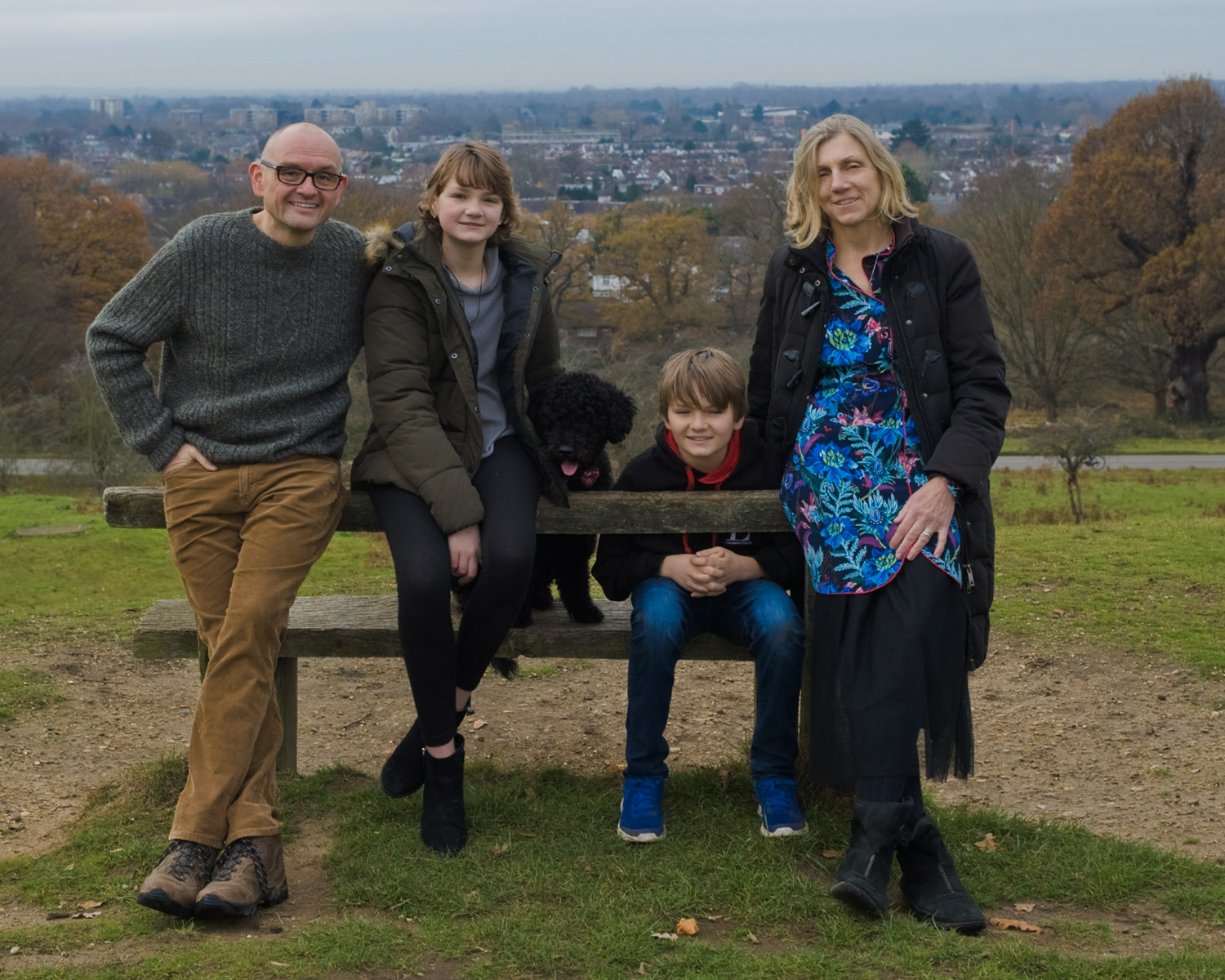

“Mia was vibrant, fun, and full of life and joy. She was creative and always enjoyed trying new things.
At eight years old, Mia was diagnosed with a Wilms tumour. This type of cancer is usually found in much younger children, and we were told that her case was particularly complex and challenging.
At the time, we were living in Hong Kong and initially thought we would only be back in the UK for six months while Mia had her treatment, but we were told her long-term care would be much better in the UK, so we moved back permanently and decided to base ourselves in Kingston upon Thames. My wife’s brother lives in Kingston, and he and his wife are both doctors, so they were there to support us and help navigate the complexities of the NHS. We knew Mia’s care would be at The Royal Marsden in Sutton, which was quite close by.
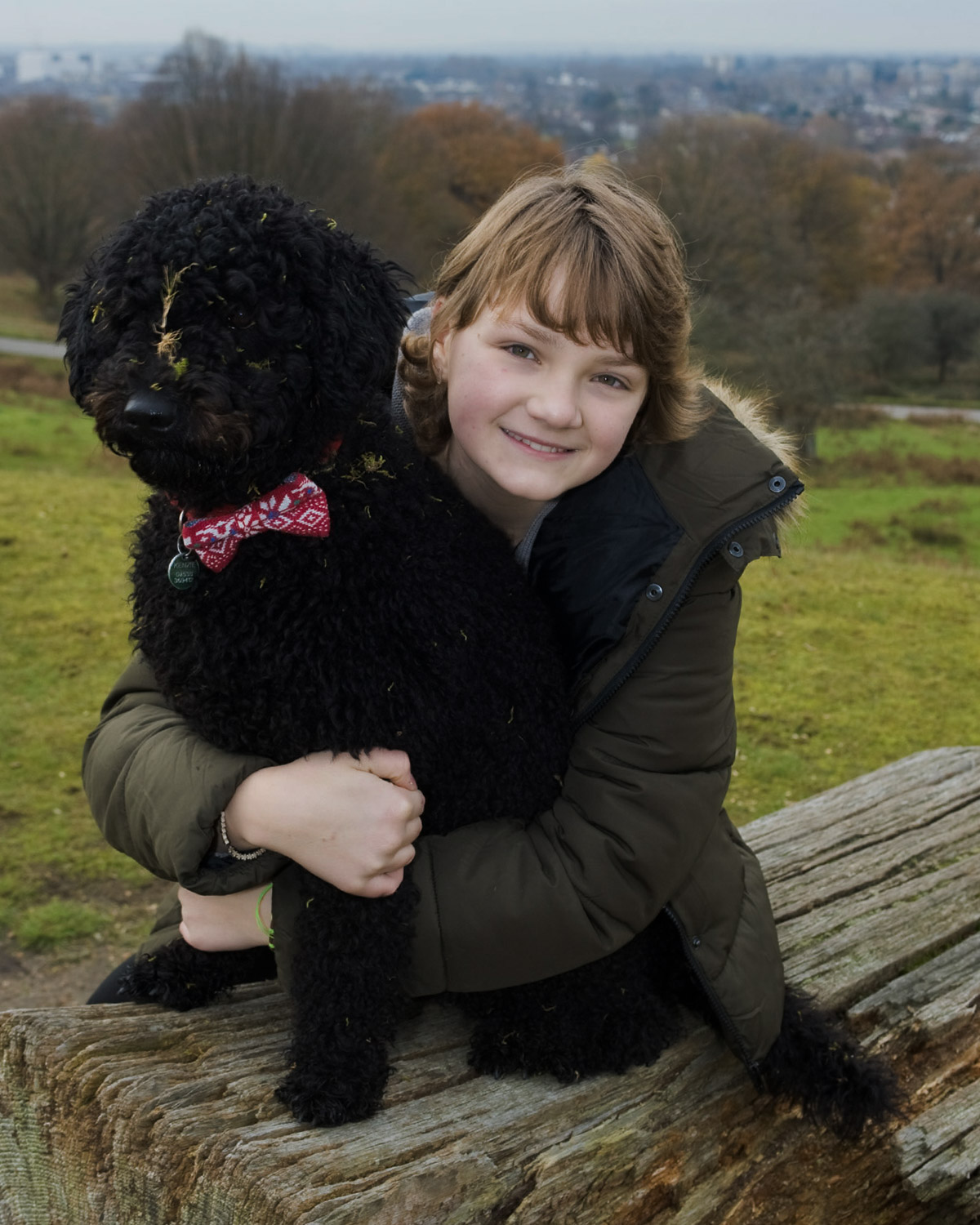
After two significant operations, chemo and radiotherapy, Mia went into remission, and we had three years of not ‘normal life,’ but life that was better than being in treatment. Sadly, when Mia was 12 years old, the cancer returned. She was cared for at St. George’s Hospital and at home, until she died in October 2018.
When I think about Mia, Richmond Park often comes to mind as it is two hundred yards from our house and Mia loved it there, especially climbing the trees. We got a dog and Mia would really enjoy playing in the park with her. I like to think of Mia outside in nature, being a normal kid. We walk around Richmond Park every day, and there is a tree that Mia particularly liked to climb, we call it Mia’s tree, and we visit it every time we are in the park.
We planted a tree opposite the school Mia went to and we visit this a lot, and so do her friends. To this day, they leave decorated stones and messages by the tree, which is lovely for us to see. There is an importance of ritual in the ways we remember Mia.
Our house is full of photos of Mia, and her shoes are still in the shoe rack. My wife Fiona and I have tattoos – I have two, one on each forearm. One says ‘love from Mia’ written in her handwriting from the last Father’s Day card I received from her, and the other has a special poem on it. Fiona’s tattoo is a cartoon image of the family, including our dog.
We have an alternative calendar drawn to thinking of Mia on anniversaries which includes her birthday and the date she died. Mia’s younger brother has been through a lot of milestones including big exams and his first relationship, and I can’t help thinking of how Mia didn’t get to experience any of this, but also, I think about how she would’ve responded to them. We are still close to a lot of her friends, and it is fantastic to see them living their lives as young adults now.
When I used to think about the things Mia loved – the rain, jumping in puddles, Chinese food, favourite movies, it used to make me feel sad, but now thinking about these things brings me joy as it allows me to remember her fondly.
Our grief has changed over the years – for a long time we were all consumed and waves of grief would overtake us, and we would often feel like we were falling apart. My wife and I both had counselling when Mia was unwell, and afterwards, which helped us to normalise our grief and understand it better. It was a reframing exercise, and it made us realise we weren’t falling apart, we were grieving.
I often ask myself, ‘what would Mia want?’. She would want us to move away from profound grief and balance it with joy, peace, and comfort. She would want us to have fun and enjoy ourselves. I initially felt guilty for feeling happy, but I took myself back to thinking about what Mia would want, and this helped me to bridge the wide range of emotions. For me to find my sense of fun, joy and creativity, is a tribute to Mia – I carry her in me. Of course, we have good days, bad days, and sad days, and this is ok.
When Mia died, our friends and family were incredibly supportive, organising rotas to help with things like shopping and walking the dog. As time has passed, the kind of support we need has naturally changed. We no longer need the practical help that was so important in the early days of our grief, but the thoughtfulness of those around us continues to mean a great deal. We still receive messages on important anniversaries and knowing that Mia’s friends still visit the tree opposite the school is particularly special to us.
Our grief is much softer now – we contemplate more and grieve less. We still think about Mia every day and will always wish she was here, but now we are able to appreciate her for the time she was here, and I am grateful that I was able to live part of my life with her. Thinking this way, influences the nature of my grief.
Meeting other dads through Momentum Echoes has been a grounding experience – there is nothing we can’t say to each other. When we meet up, I feel accepted for everything I bring and not judged.
Momentum’s support has changed in subtle, intelligent ways. As a family we first started receiving support when Mia was unwell. There is something about being part of a group that understands both journeys – being a parent of an unwell child and being a grieving parent. There is a sense of acceptance in a world not designed to accept people like us.
There is a fallacy that grief is something you get over, and I disagree. Grief reflects how much love you have for someone and why would you ever want to forget them. You grow into your grief – it will always be there, but it will change. Society wants us to move forward, but grief doesn’t allow that, and it shouldn’t. To be asked to move on is, in the end, to be asked to love our child less, and no parent should be asked that. Momentum Echoes has created a space where this is acceptable.
To a parent who has recently been bereaved, I would say it is important to recognise just how impossibly difficult everything feels. Your world has been turned upside down, and that is shattering. You lose the sense of innocence that comes from believing the world should work in a certain way. Over time, as you learn to live with your grief, things will slowly begin to change. Try to ask for support and allow yourself to be vulnerable. Recognise that you don’t have to manage everything on your own. That can be difficult, particularly as a man, but if you put your hand up and let people know you are struggling, you will be surprised by how much support there is for you.
I qualified as a professional counsellor earlier this year and have just opened my private practice. Alongside this, I work as a volunteer bereavement counsellor. Grief doesn’t frighten me or make me flinch anymore – I can stay alongside people for as long as they need.
I love walking and have been on a number of walks with friends and family to remember Mia. In the New Year, I am starting a series of walking events with Momentum Echoes, bringing people together to enjoy the benefits of being outdoors, spending time in nature and supporting their mental health. The walks will offer a relaxed, welcoming environment where people can come together and find support.”
Story taken November 2026.
Related News:
-
News
Move for Momentum raises £25,000
We are delighted to share that this year’s Move for Momentum campaign has raised almost £25,000!
-
News
Tracing the roots of Andrew’s tree
This summer, Sophie, Neale, and their son Thomas travelled to Northern California to find the Mother Tree whose seeds grew…
-
News
Thea rises to the challenge on Box Hill
On Sunday 20 September, 11-year-old Thea, a Momentum Young Ambassador, from Surrey, took on Burford Spur, the steepest section of…

Get the latest news straight to your inbox.
Sign up to our newsletter for all of the latest updates from Momentum straight to your inbox.